
The “Ohne Gentechnik” segment of the agriculture, processing, trading and marketing industries is booming in many European countries. But products made with new genetic engineering methods pose a massive economic threat to that segment. Consistent with the European Court of Justice (ECJ)’s ruling, the “Ohne Gentechnik” business sector advocates that all products made with the new genetic engineering methods be regulated as “genetically engineered”. Germany’s VLOG and Austria’s ARGE Gentechnik-frei made this clear in the EU Commission’s stakeholder survey in the spring of 2020. A summary of our responses can be found in this document.
What are we committed to?
“Today, the ‘Ohne GenTechnik’ seal is supported by the industry and fully accepted by consumers. The development of the seal is an outstanding success story in which we have all played a part.”
Ilse Aigner, President, Bavarian State Parliament, 2024
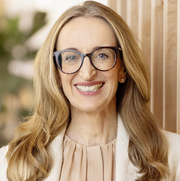
“At dm, it is important to us that people continue to be free to choose whether we want to produce and consume genetically modified food. It's about our diet, about what we feed our bodies every day.”
Kerstin Erbe, Managing Director Product Management, dm-drogerie markt GmbH + Co. KG, 2024
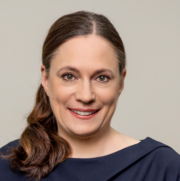
“REWE Group believes that it is necessary, also in the area of new genetic engineering methods, to submit products manufactured using these techniques to an approval procedure including a risk assessment and to continue to take into account the principles of traceability, precaution and labelling. This is the only way to ensure freedom of choice and self-responsible purchasing decisions in the future.”
Dr. Daniela Büchel, Member of the Board, REWE Group, 2023
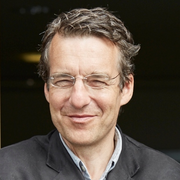
“FRoSTA has stood for maximum transparency for over 20 years. Everyone should be able to understand whether a food has been produced with or without genetic engineering so that they can make the right decision. Only then can food manufacturers and farmers differentiate themselves.”
Felix Ahlers, Chairman of the Executive Board, FRoSTA AG, 2024
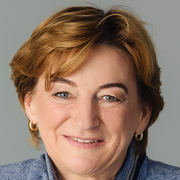
“Freedom from genetic engineering is the basis of our organic farming. We live and work with nature. 'Leaving the natural natural' is our mission.”
Barbara Scheitz, Managing Director, Andechser Molkerei Scheitz GmbH, 2024
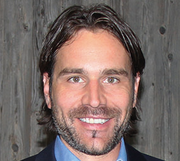
“Freedom of choice when it comes to GMO-free is something our customers want just as much as we do. Since 2010, all our farmers have been feeding their milk without GMOs and we now also label all natural products such as butter, whipped cream and natural yoghurt with the VLOG-certified "Ohne GenTechnik" label. We are committed to ensuring that this remains the case.”
Bernhard Pointner, Managing Director Molkerei Berchtesgadener Land, 2024
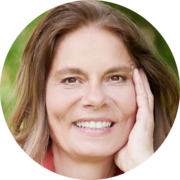
“I am fighting so that one day we will not need this seal anymore – because everything is non-GMO. The VLOG and its widely used seal help create and strengthen public awareness of this goal”.
Sarah Wiener, chef, entrepreneur, author and former Member of the European Parliament, 2020

“The ‘Ohne GenTechnik’ seal enables people to protect the environment on an international scale while shopping: The logo on milk, eggs and meat shows consumers that no genetically modified plants, e.g., from South America, have wound up in the animals’ feeding troughs. CRISPR genetic engineering must certainly be regulated and labelled so the seal can continue to guarantee freedom of choice”.
Prof. Dr. Hubert Weiger, Honorary Chairman, Friends of the Earth Germany (BUND), 2020
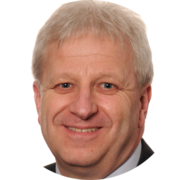
“The VLOG Standard provides us with a practical framework for ensuring that feed production is GMO-free. I contribute my company’s experience in ‘Ohne Gentechnik’ compound feed production to the VLOG expert group and actively collaborate in the further development of the VLOG Standard”.
Artur Bisenius, Management, beweka Kraftfutterwerk, Heilbronn, 2020