
News
Court bans overly general environmental advertising claim
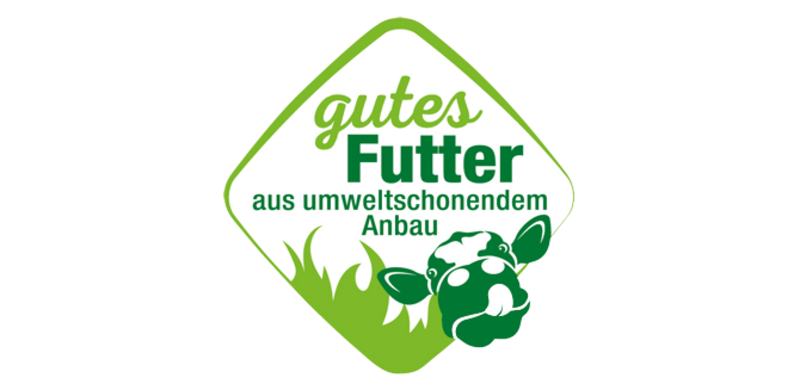
The judges ruled that the slogan “good feed from environmentally friendly cultivation” gives the impression that the feed was “produced in a way that takes particular account of ecological considerations”. As the feed was only “predominantly” grown on the company’s own land, it was not possible to infer regional origin, short transport distances and, consequently, sustainability from this.
Court: General statement raises expectations too high
With such a slogan, consumers also assumed “higher environmental standards”, for example regarding seed, cultivation methods, the use of pesticides and fertilisers, irrigation and the regional nature of further processing – which, however, was not the case.
GMO-free feed is not a given
The use of GMO-free feed alone is not sufficient to justify the far-reaching general claim of “good feed from environmentally friendly cultivation“. According to the court, this is also because “the renunciation of genetic engineering essentially complies with legal requirements anyway“. However, the latter does not apply to animal feed in particular – in Germany and in the EU, a great deal of imported genetically modified soy from South America is used for this purpose. The “Ohne GenTechnik“ (Non-GMO) seal specifically signifies the avoidance of such feed in dairy products, eggs and meat.
The “Ohne Gentechnik” label is unambiguous and compliant with regulations
The ruling primarily concerns greenwashing and the requirements for general environmental claims. It therefore does not necessitate any action regarding the well-established “Ohne GenTechnik” label with its clear and unambiguous message. When combined with environmental and sustainability claims, particular care must always be taken – as has always been the case. This is likely to become even more important when the “Empowering Consumers (EmpCo)“ Directive comes into force on 27 September 2026. The “Ohne GenTechnik“ seal, with its comprehensive rules and established independent certification system, already meets the EmpCo requirements.
Ambiguous environmental claims must be explained directly on the product
In its recent ruling on the Netto slogan, the Amberg Regional Court also clarified that environmental claims must be explained directly on the product itself. In the case of ambiguous environmental terms, the advertising itself must, as a matter of principle, explain clearly and unambiguously what is specifically meant. In the court’s view, a reference to a website that consumers must visit themselves is not sufficient. Netto should therefore have explained on the yoghurt pot itself what is meant by “environmentally friendly cultivation“.
Amberg Regional Court, judgement in the DUH v Netto case of 6 July 2026, case number 41 HK O 983/25 (German)
Lebensmittelzeitung: Netto suffers legal defeat (German)
Deutsche Umwelthilfe: Greenwashing judgement against Netto (German)
“Ohne GenTechnik” seal complies with new EU requirements on consumer protection