News archive
Traces of genetic engineering in organic rice - The story of a traceability investigation
In July 2023, the food safety monitoring authorities in the German state of Hesse discovered genetic engineering contamination in a sample of organic basmati rice from Pakistan. The source could be an experimental release in 2001. The case was only reported to the EU alert system with a delay of over a year.
EU Member States position themselves regarding Hungarian NGT paper
The statements of 15 EU Member States in an informal enquiry by the Hungarian Council Presidency on the unresolved issues relating to the deregulation of new genetic engineering techniques (NGT) have been published. The NGT supporters insist on the tried arguments, while the opponents of deregulation introduce new aspects. One country unexpectedly changes its position.
Campaign for GMO-free food
From 13 September to 13 October 2024, an alliance of associations and initiatives is promoting a campaign for a GMO-free agriculture and food industry. Numerous events will draw attention to the threats posed to food production without genetic engineering by the deregulation of EU genetic engineering legislation. 19 September marks "GMO-free food day".
Greenpeace supermarket check: "Ohne GenTechnik" seal creates transparency
Greenpeace has regularly surveyed the major grocery chains on their meat ranges since 2020, and on dairy products since 2022. Greenpeace is dissatisfied with the development in the food retail sector regarding the labelling of farming methods. In contrast, the environmental organisation believes that GMO labelling is very well covered by the "Ohne GenTechnik" (Non-GMO) seal. VLOG has asked the food retailers about new genetic engineering.
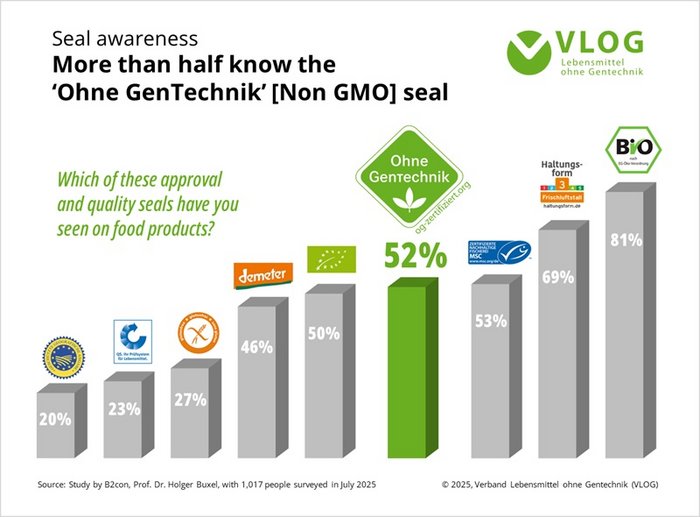
Market research: "Ohne GenTechnik" seal scores highly in seal check
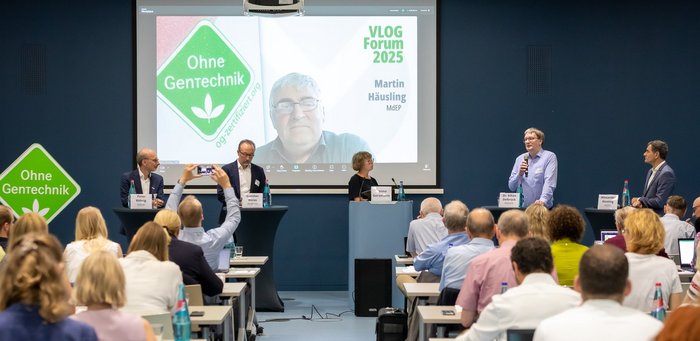
In his presentation at the VLOG Forum on the current state of market research into food seals, Dr Holger Buxel gave the "Ohne GenTechnik" seal consistently good marks. You can find a summary of the results and a video of the entire presentation in our press release.
Feasibility study: Detection methods for new genetic engineering are realistic
The research project on "Detection and identification methods for genome-edited plants", which has been funded by the German Federal Ministry of Food and Agriculture (BMEL) since January 2021, presented interesting results in July this year. According to these results, the detection of NGT plants is possible and reliable tests can be developed for this purpose.
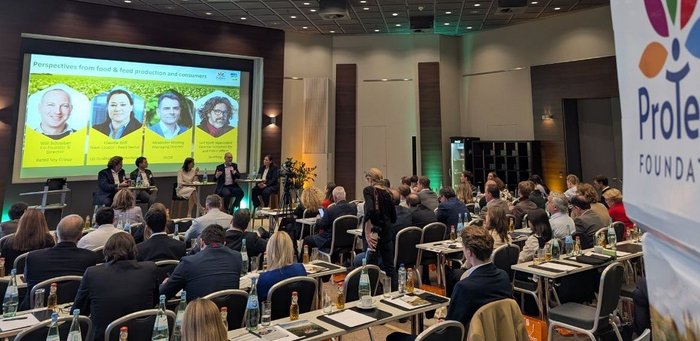
Detection methods for new genetic engineering: DARWIN Project presented at the VLOG Forum
The EU-funded international research project DARWIN is developing innovative detection methods for the traceability and transparency of products from new genetic engineering. First-hand information was provided at the VLOG Forum in Berlin.
Hungary opens the debate on genetic engineering deregulation
The first EU Council working group on the regulation of new genomic technologies (NGT) under the Hungarian Council Presidency will meet on 19 July 2024. In this discussion paper, Hungary raises fundamental questions about the EU Commission's draft legislation. Member States call for far-reaching changes.
DARWIN Project: Giessen University researches consumer behaviour regarding new genetic engineering
Justus Liebig University Giessen (JLU) is part of the EU research project DARWIN and is looking into questions of acceptance, transparency, knowledge transfer and communication on the subject of new genetic engineering.
ADM wants to crush more GMO-free soy from German cultivation
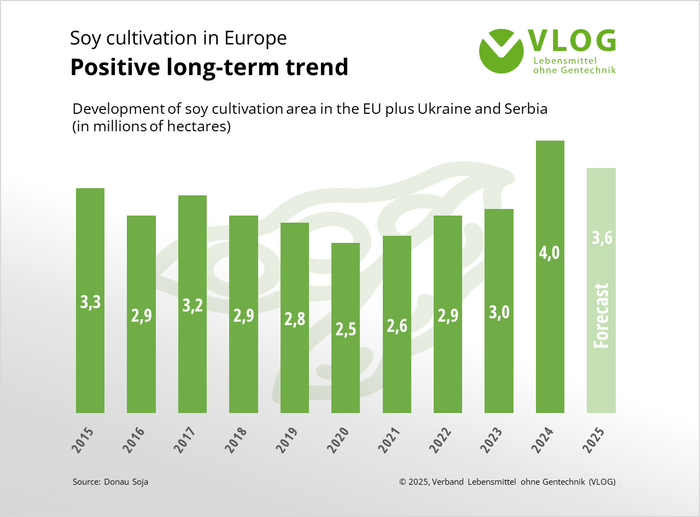
In Germany, soy is still a niche crop, although demand is growing and the potential for cultivation is there. A large animal feed manufacturer has reacted, expanded its production capacities and is actively looking for new soybean farmers.
European Elections 2024: Who wants to preserve genetic engineering rules, who wants to abolish them?
The result of the European Elections on 9 June 2024 will also have an impact on the EU's future genetic engineering regulations. In Bavaria, this is even an election campaign issue. What is the position of the various German political parties?
No deregulation of genetic engineering before the European elections
The EU Commission's plans for new genetic engineering legislation have been postponed until the next legislative period. This provides time to consider new scientific findings and convince other Member States of the risks of deregulating genetic engineering.
Explosive government assessment: Many risks associated with new genetic engineering
France's food safety authority Anses sees numerous risks associated with new genetic engineering and urgently recommends risk assessments and monitoring. The controversial report refutes the EU Commission and the French government and was initially withheld.